
Free masterclass recording with Laura and Evan Minard
Nurse coaching: what your spouse needs to know
A conversation with my husband, Evan
Recorded live on Wednesday, October 28, at 6:30 pm CT
Starting a nurse coach practice changes your home too. Evan and I talk about it from both sides: what I went through as the one who was changing, and what he saw as the one watching. Watch it together, or send it to your partner.
Ready to become a certified nurse coach? Take a look at the program and enroll, or talk with an advisor first.
Inside the recording
Tap a time to jump straight to it.
Agreements, not expectations
Halfway through the class, Evan shared a framework we still use at home. Most of us treat these two words as the same thing. They aren't.
Expectation
Lives in your head
You hold it for someone else without their knowledge or their buy-in. It almost always leads to resentment or discontentment.
Just noticing that you're holding one is powerful, because then you get to choose what to do with it.
Agreement
Said out loud, together
It starts with something like, "I'd really like this to happen in our life. What do you think about that?" Then you go back and forth, like table tennis, until you both can say yes.
Because you both agreed with clarity, there's no room for resentment. Either of you can raise it and change it at any time, especially when life is in transition.
Evan and I are rewriting ours right now. When I noticed resentment creeping in, I knew what it was.
"This isn't an Evan problem. This is an agreements problem."
It's simple, but it's not easy.
A nurse coach practice means being new at coaching and new at running a business, usually while you still have your job and your home to look after. I don't know of anything more vulnerable than stepping into both at once.
To the partners watching, I think what you're doing is heroic. And who you become if you keep going through that difficulty is the best part.
What support looks like at home
Evan and I each shared what helped, from both sides. Here's the short version.
-
Do the work nobody sees
Evan pointed out there are two kinds of support. There's the financial kind, and there's the kind that says, "I'll handle dinner tonight." A new practice takes sacrifice in time and energy too, not only money.
-
Say what you need to hear
We know what we most need to hear, and we need to be explicit about it. Don't wait for your partner to pick up on it. Say it out loud, then agree on the exact support you need at each stage, because it changes.
-
Invite, don't push
Evan said the more you push, the less likely he is to take it in. This work is an invitation. I added that we can never change the other person, only ourselves, and that's a hard pill to swallow.
-
Say it with belief
Words of affirmation and belief go so far. When I told Evan I wanted to hire a business coach, his answer was, "Sure. Double down. Let's let it roll."
-
Show up for the hard parts
Evan's warning to partners: you're signing up for a roller coaster. There will be tough months when your partner works all month and makes no money. So agree together on how you want to be strapped in.
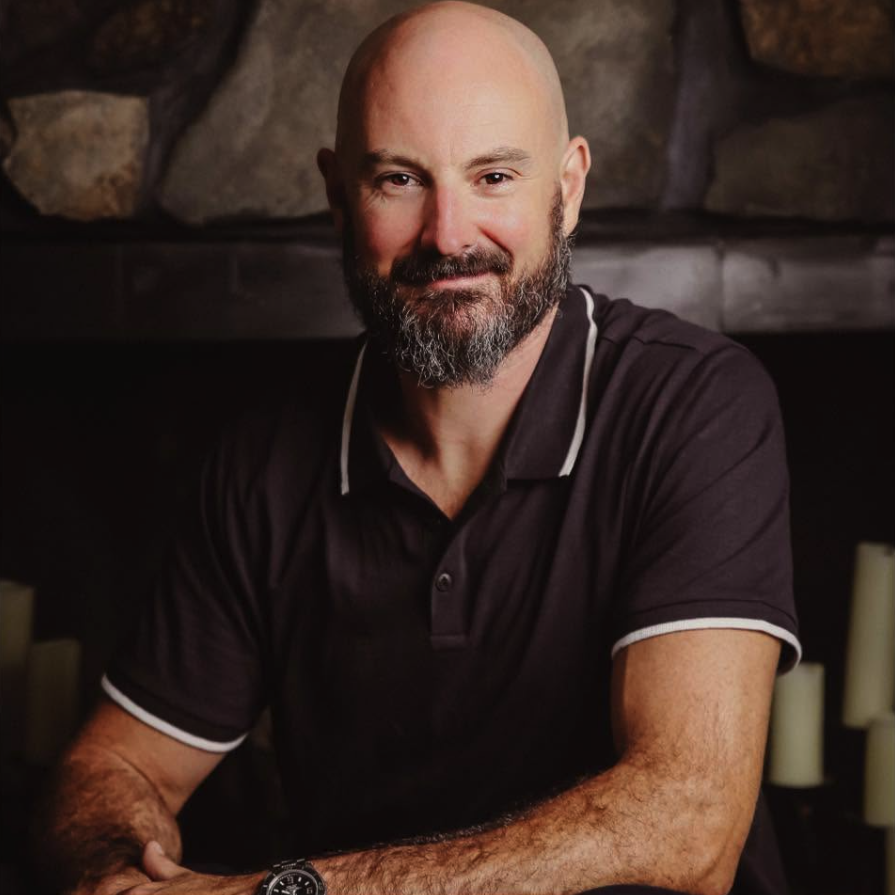
My husband and co-host
Meet Evan
Evan was a fire captain and paramedic when we met. He left the fire service in 2022 to coach full time, and he's an ICF certified coach who calls himself a leadership and life harmony coach.
He mostly works with entrepreneurs. Half of his practice is local and in person in Tennessee, and the rest is on Zoom.
If you're a spouse or partner and you'd like to experience coaching, Evan offers a free session. You can also write to him with questions.
Your questions, answered
After our conversation, I opened the floor. These are the questions that came up, with the short version of our answers. The full conversation is in the recording.
How is coaching different from therapy?
Therapy and counseling are wonderful, and coaching is different, even though it can look the same from the outside. A therapist assesses what's wrong, and the goal is usually to get someone functioning.
A coach is trained to see you as whole and resourced, with real strengths. We take a snapshot of your life today, then work with you for about three to six months toward the future you want. I think of it as remodeling a house. You walk through every room, tell me what you love and what you don't, and we change the parts you want changed.
Why can't I just use ChatGPT?
You can, and if it gets you the outcome you want, do it. Information is cheap and easy to find. Most of us nurses already know what to tell someone who wants to lower their A1C.
What people pay a coach for is changing their behavior. That takes a relationship, and someone who sees you and keeps you accountable. Coaching isn't something people need. It's something they decide they want.
How do I bring up the investment with my partner?
Bring the vision, not just the price. Say what you want, why it matters to you and that you believe it will work. That lands very differently from, "Do you think maybe I could do this coaching thing? It's only $1,200."
If you sound unsure, your partner will feel it. Evan told me that when I asked without confidence, he'd say no. So go in asking, "How could we make this work?" Nobody has a coaching budget, so it's a decision you make together.
As a coach, I never pressure a client to decide without her partner. If she says she needs to talk to her husband, I ask if I can coach her on how to have that conversation.
What if my partner wasn't on board when I started?
It's common. Evan felt the distance too, before he started his own work. His answer here was that partners want to know your words and your actions back the dream up.
Staying curious about how you can support it, and asking, is already doing that. When your partner acknowledges you for it, that closes the loop and gives you a reason to keep pouring in.
My partner is new to selling and I'm not. How can I help?
You may have to wait for her to come to you. I can't coach Evan, since we live together. It would confuse the relationship unless he asks.
Selling coaching is advocacy. If you believe the work will change someone's life, you're advocating for them, and nurses do that for their patients all day.
One real help: listen to the last fifteen minutes of her proposal calls, with the client's details left out, and pick out three things she could have done differently. By her hundredth proposal, you'll be a superpower. In the Residency we teach sales slowly, in two parts, because no nurse signed up to be a salesperson.
Do I have to meet clients in person?
No. You can offer Zoom only. If you do meet in person, a public library room, a park bench or a picnic table all work, and a coffee shop or trail is easier once you know the client. You can also rent an office by the day or the week. What matters is that nobody can overhear.
I'd offer to go to an acquaintance's home instead of hosting people in mine, and share your location with your partner. Evan meets half of his clients in person, and he treats it as a coaching space, not a casual coffee. He says there's a sacredness to it.
Should I work for an organization or open a private practice?
I really recommend private practice first. After certification you have your 60 hours, and that usually isn't enough. You need about 40 to 60 more, so I'd open an LLC and get paid for them.
Some organization jobs call it coaching but run on a time clock with a script, and a few people weren't happy in them. Other organizations hire nurse coaches to support staff and report very high satisfaction and better retention. If you can propose and sell coaching to a few individuals, you'll sell yourself to an organization much better. I'd wait until you have around 120 hours.
Can I coach my family?
You'll start coaching everyone, everywhere, all the time. I have two versions of me, coach Laura and introvert Laura. Coaching changes the way you relate everywhere.
With family, it's about permission. Evan is a fixer, so he asks me, "Are you looking for solutions, or would you like me to listen?" Sometimes I do want a solution, and then we fix it.
"When one partner starts to rapidly change, it goes one of two ways. It makes the relationship stronger, or it can make the relationship feel a little bit further apart."Laura Minard, Founder and CEO, Nurse Life Coach Academy
Bring your partner along
I want your partner on board. I want them on the Zoom calls, skeptical and asking me everything. When they're bought in to your vision, you tend to do better.
Enroll now
In our course, we teach how to have this conversation with your partner, and we give you scripts. It's 28 weeks at 4 to 6 hours a week, with 121 CE credits and 60 coaching hours with real people before you graduate. You don't have to take notes. We've got you covered.
See the certification and enrollTalk it through with an advisor
If your partner has questions, I'd love for them to ask. A call with our team is a good place to start. Every once in a while, we'll even tell you to wait.
Book a free advisor callAlready certified?
Sixty hours usually isn't enough
When you finish certification, you have your 60 coaching hours, and that's rarely where it stops. I'd like you to have about 40 to 60 more under your belt, ideally paid, before you go after organization contracts.
The Nurse Coach Residency is our 200-CEU advanced training for certified nurse coaches who want a private practice with real clients.
Explore the Residency
Laura Minard
BSN, RN, NC-BC. Founder and CEO of Nurse Life Coach Academy
I worked in the ICU for years, and I knew I didn't have much time left in traditional healthcare. Burnout and a career that no longer matched me kept getting louder. That's when I found nurse coaching.
I certified in 2018 and left my job right away. In late 2019, colleagues kept asking me to help them get their businesses started, so I began mentoring other nurse coaches. Since then I've trained more than 1,400 nurses.
Along the way I saw that most nurse coaches end up doing life coaching, not health coaching. Health touches relationships, beliefs, work-life balance and emotions. That's why I built Nurse Life Coach Academy, so you can coach a client in any area of her life with confidence.

